Do I need Claude to use these?
No. GitHub Copilot is the primary target, and Codex and Cursor are peers rather than afterthoughts. Every skill is plain Markdown with no harness-specific assumptions, so any tool that can read a file into context can run them.
What is a skill, exactly?
A Markdown file with front matter, holding the method for one job: what to ask, what order to do it in, and what goes wrong if you skip a step. It is closer to a checklist written by someone who has done the work than to a prompt.
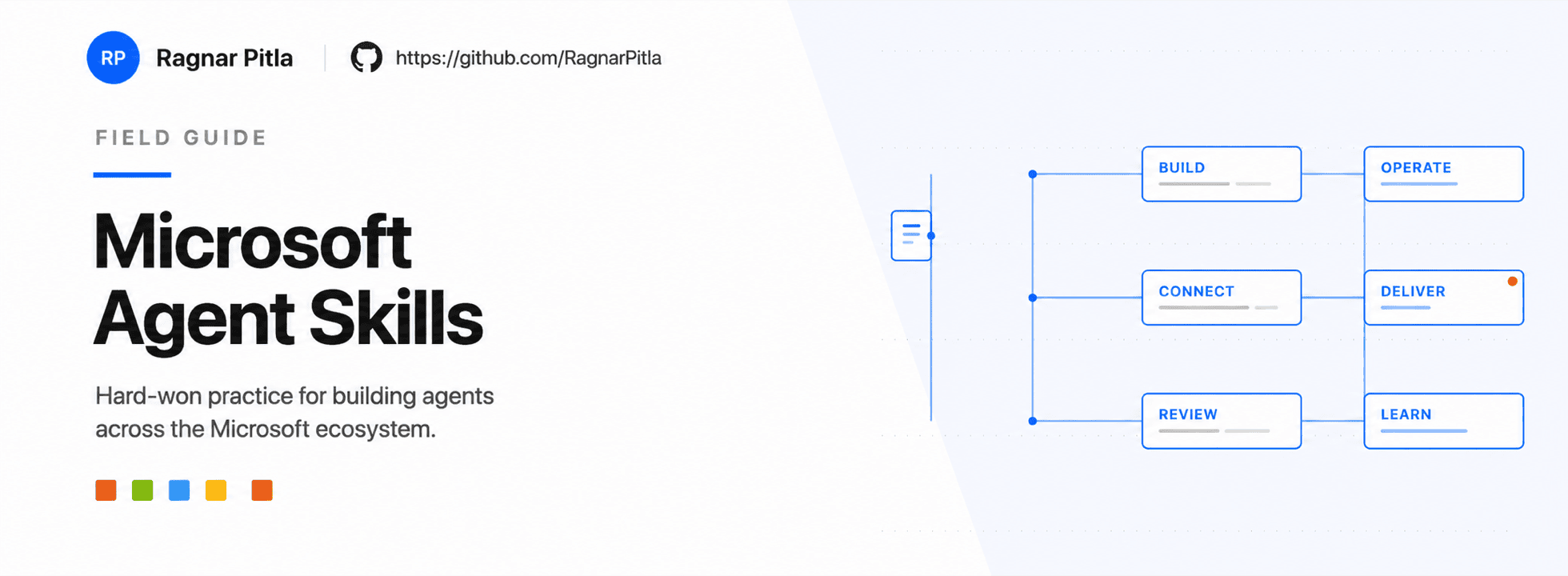
Why are the categories named after verbs, not Microsoft products?
Because Microsoft renames its products constantly. A folder called copilot-studio would be wrong within a year, and a skill filed under a renamed product becomes unfindable. Products appear inside a skill, never as the top-level taxonomy.
How do I know the technical detail is right?
Every skill records the date its claims were last read against Microsoft's documentation, and one line on where the knowledge came from. Perishable claims carry their own review date and the build fails when one goes stale. Where something could not be verified, the skill says so instead of guessing.
Is any of this customer information?
No. Nothing here names a customer, carries data from a customer tenant, or describes anything Microsoft has not announced publicly. Worked examples use invented companies and synthetic data, and a scrub gate runs before anything is published.
Can I use these commercially?
Yes. MIT licensed. Fork it, copy one skill out of it, or rewrite them for your own stack.
 Microsoft Agent Skills